The User
The primary users were Distributor Sales Representatives (DSRs) operating in different parts of India, with varying levels of motivation, experience, and performance targets. The system needed to cater to multiple personas while remaining simple and intuitive.
The workflow of DSRs follows - Getting assigned a sales beat (set of stores for the day). → Visiting each store within the assigned beat. → Selling and taking orders for Marico’s products. → Driving daily sales performance. → Earning incentives based on achieved targets.
Project Overview
Marico, a leading FMCG company known for brands like Parachute and Saffola, relies heavily on its Distributor Sales Representatives (DSRs) to drive sales across regions. This project focused on redesigning Marico’s DSR app by integrating gamification and loyalty mechanics to improve engagement, motivation, and clarity around incentives.
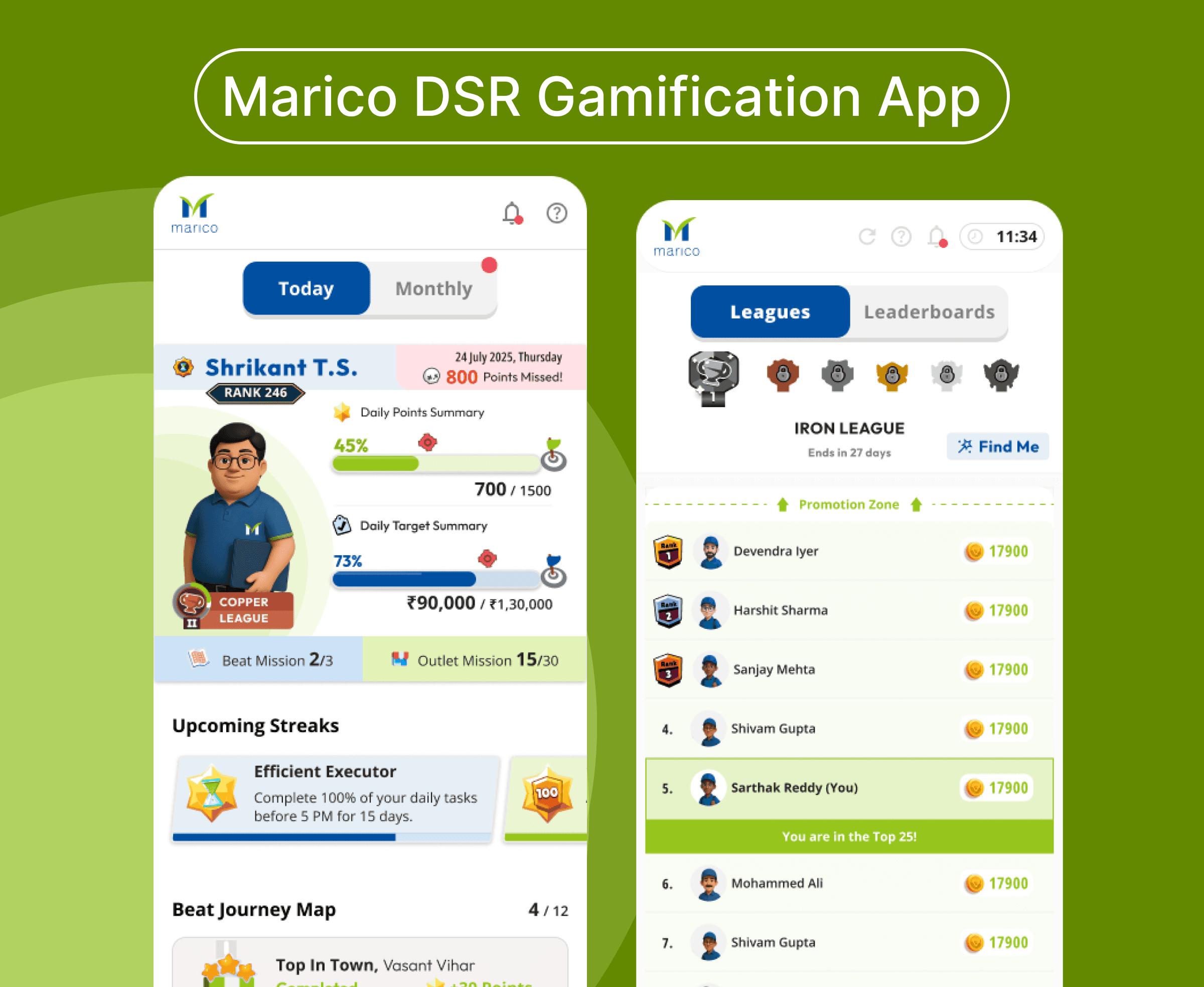
Marico DSR Gamified App
A gamified performance management app that helps Marico’s sales representatives track incentives, targets, and progress through missions, badges, and leaderboards.
Sector
Gamification App + FMCG Sales
Marico DSR Gamified App ▼
The Problem
1.) The DSRs lacked consistent motivation and clear visibility into their performance and rewards, leading to inconsistent sales outcomes.
2.) There was a lack of real-time tracking of DSR activities, resulting in disengagement and a stagnant reward system.
3.) Lack of clarity on their incentive structure and underutilized features of special beat missions which lack rewards.
Design Process
The research phase involved qualitative interviews with 27 DSRs across Delhi and Bulandshahar to understand their motivation levels, behavioral patterns, and performance challenges. We used Tree Testing to understand their mental models and information hierarchy, and applied the Fogg Behavior Model to analyze motivation, ability, and triggers. The overall design strategy was guided by the Octalysis Framework of Gamification, which helped structure both intrinsic and extrinsic motivation mechanisms.
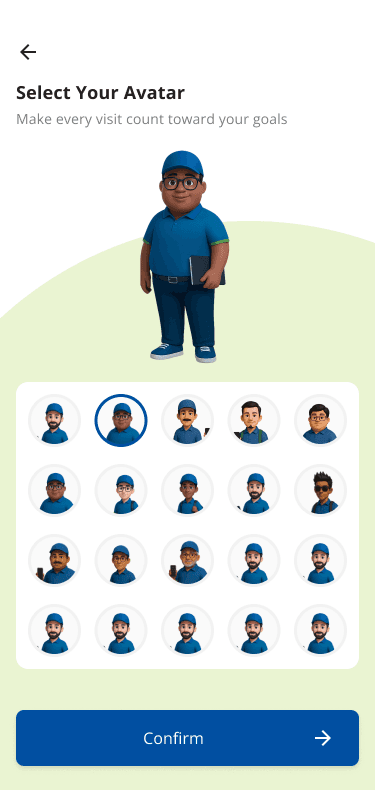
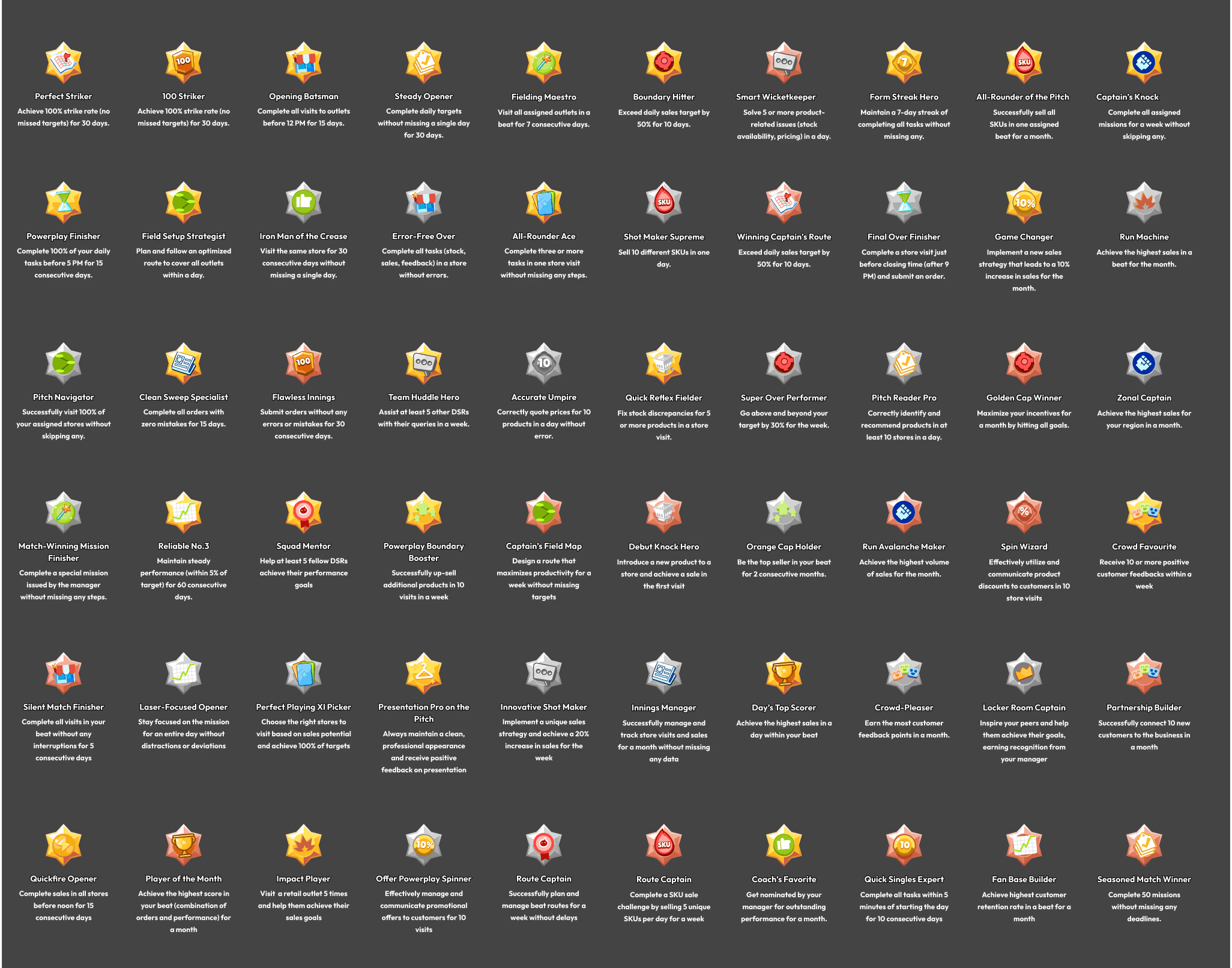
The gamification layer positioned DSRs as characters within the system, allowing them to customize avatars, earn badges, and compete through leaderboards and leagues. This introduced social recognition, progression, and reward-based motivation while also improving clarity around incentives and performance.
Dashboard
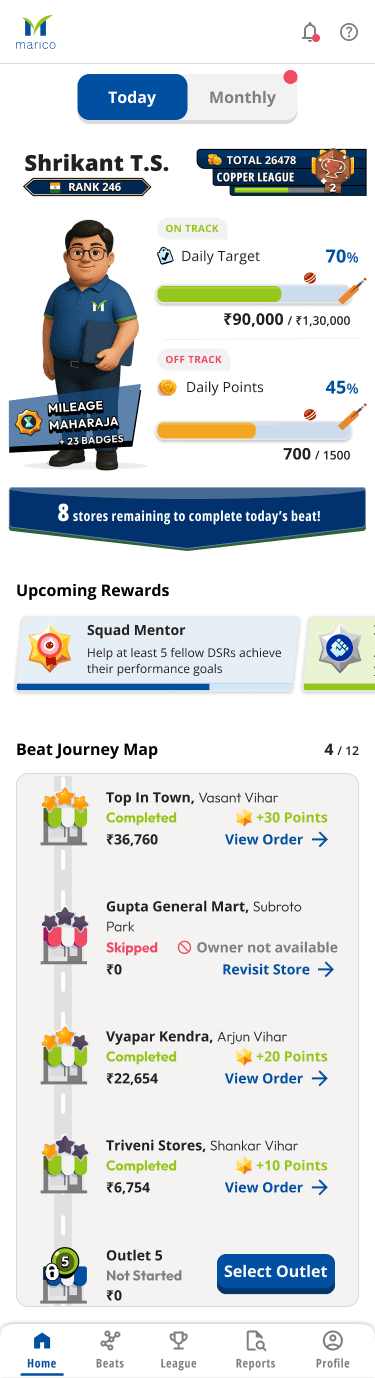
The dashboard serves as the main landing screen after login and provides a real-time overview of the user’s daily performance and targets. It displays the selected avatar, total points earned, overall achievements, All-India rank, and earned badges. Progress indicators show how close the user is to unlocking new badges, followed by the Beat Journey for the day.
Beat Journey
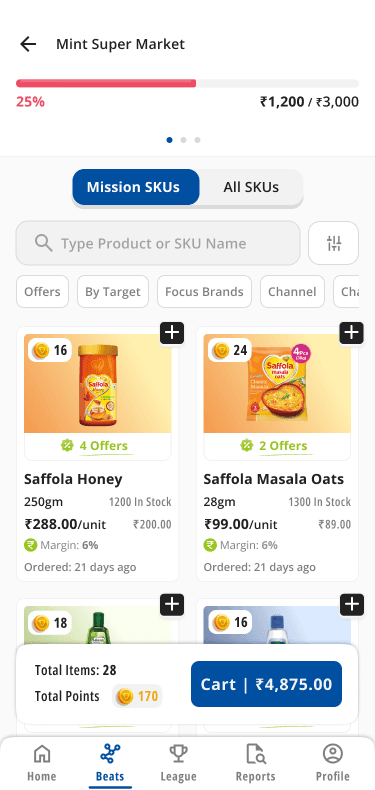
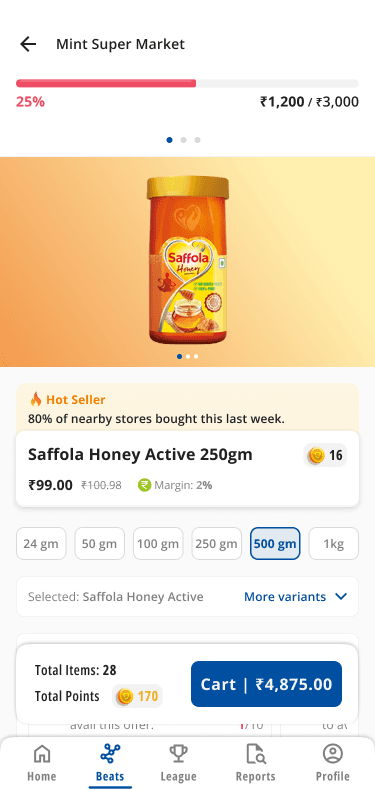
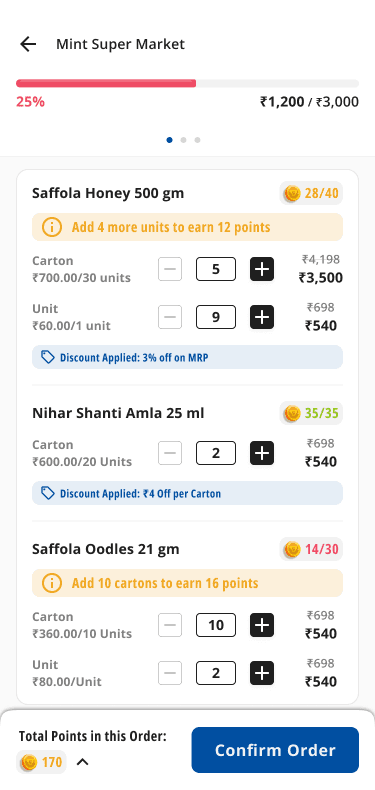
The Beat section allows DSRs to log store visits and place orders in real time. As targets are met, points are updated instantly with clear breakdowns and visual confirmation of successful orders. Users are shown success states and badge-earned screens when milestones are achieved, reinforcing positive behavior.
Leaderboards & Leagues
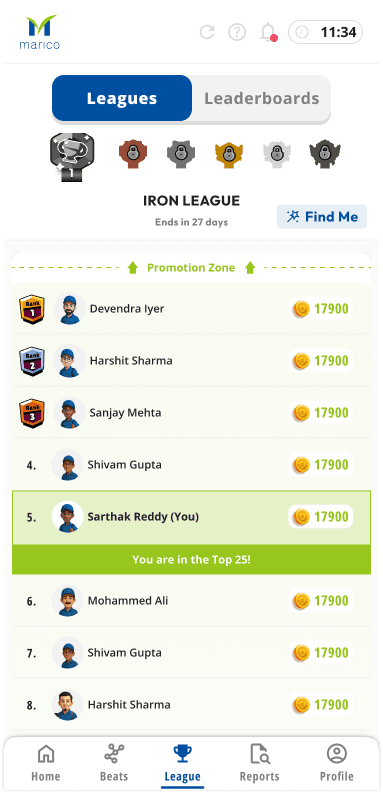
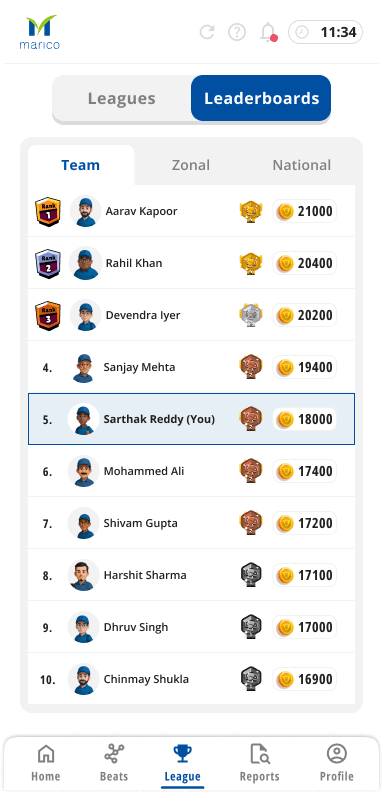
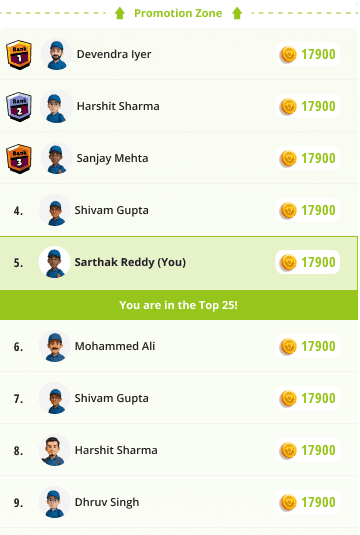
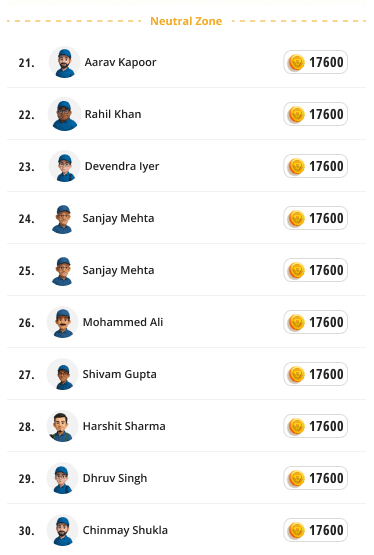
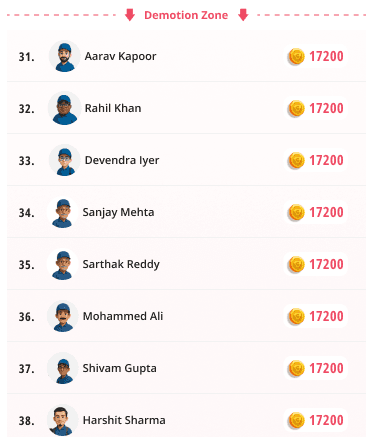
The national leaderboard is structured into six leagues : Iron, Copper, Silver, Gold, Platinum, and Diamond, which refresh monthly. Each league contains promotion, neutral, and demotion zones, enabling users to move up, down, or retain their position based on performance.
Additional leaderboards allow users to compare rankings within their team, zone, and across top-performing zones nationally.
Profile
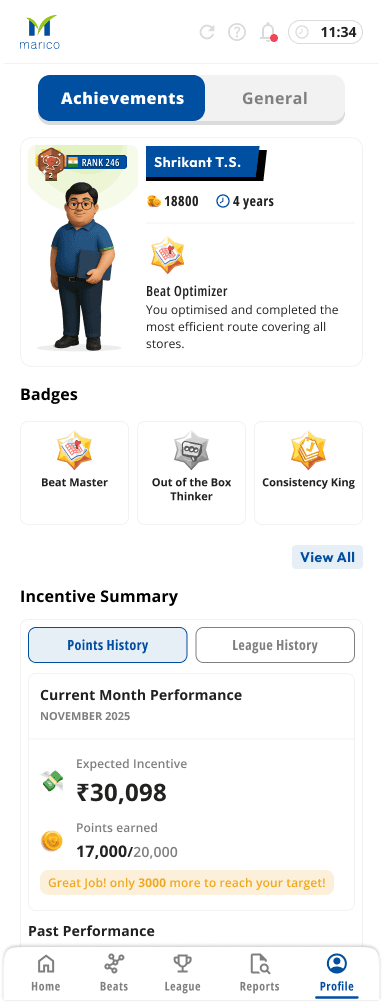
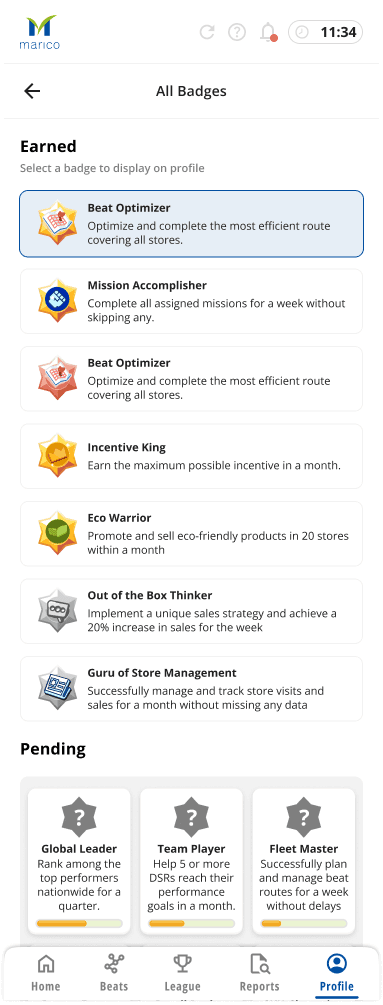
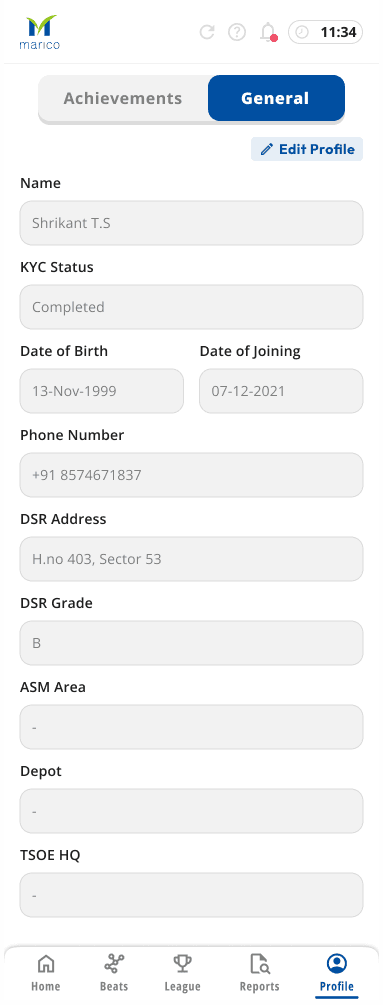
The profile section displays a public profile card visible from leaderboards, showing the user’s avatar, rank, points, tenure at Marico, and highlighted badge. Users can view all earned and pending badges, select which badge to showcase, and track monthly league history and point breakdowns to estimate expected incentives.
Impact
The redesigned gamified system created a more engaging and transparent performance environment for DSRs by turning daily sales tasks into goal-oriented, trackable experiences. Real-time feedback through dashboards and beat journeys improved visibility into progress and incentives, while leaderboards and leagues introduced healthy competition and social recognition across regions.
The integration of avatars, badges, and progression mechanics helped increase daily activity, encouraged completion of additional missions, and made incentive structures easier to understand, leading to stronger motivation and more consistent participation across the sales force.
Conclusion & Learnings
This project demonstrated how behavioral design frameworks can be applied to real-world enterprise systems to drive meaningful user engagement. It reinforced the importance of designing for motivation, clarity, and feedback loops rather than relying solely on numeric targets and rewards.
Through this project, I gained practical experience applying the Fogg Behavior Model, Octalysis Framework, and Tree Testing to build gamified systems. I also learned how design decisions, such as visibility of progress, social recognition, and immediate feedback, can significantly influence user behavior and longterm engagement in complex operational products.
Figma Prototype
Hi, I'm Anushka & this experience was crafted for a bigger screen. Hop on your desktop to view it the way it was meant to be!
Anushka Balyan